Oakland Hills Country Club (South Course)
- Par
- 70
- Yardage
- 7,037yds
- Holes
- 18
- Opened
- 1918
- Access
- Private
- Design
- Classic
History
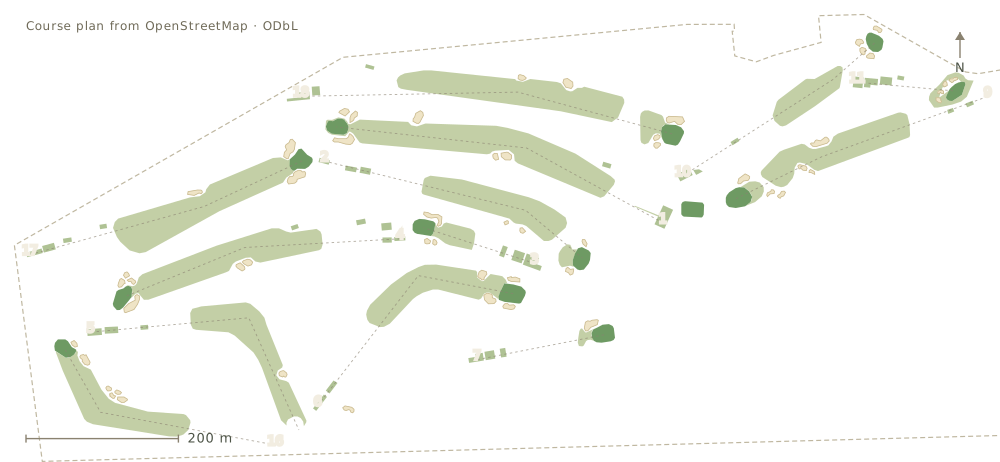
Oakland Hills Country Club's South Course, Donald Ross's 1918 creation in suburban Detroit later overhauled by Robert Trent Jones Sr. for the 1951 U.S. Open, became famous when Ben Hogan called it the Monster after taming it with a final-round 67. Jones narrowed fairways and added 61 bunkers, creating a course so penal that competitors despaired. Hogan's mastery is considered among the five greatest rounds ever played. The South Course subsequently hosted six more U.S. Opens and three PGA Championships, including Padraig Harrington's 2008 triumph. The club underwent a full restoration by Gil Hanse in 2021.
Signature Hole
16th hole, par 4, 408 yards — a demanding mid-length par-4 with a stream crossing that felled many U.S. Open contenders
Notable Tournaments
- 1924 U.S. Open
- 1937 U.S. Open
- 1951 U.S. Open
- 1961 U.S. Open
- 1985 U.S. Open
- 1996 U.S. Open
- 1972 PGA Championship
- 1979 PGA Championship
- 2008 PGA Championship
In the context of the top 100
Where this course sits against every ranked course on the list.
Frequently asked questions
Is Oakland Hills Country Club (South Course) public or private?
Oakland Hills Country Club (South Course) is a private club. Play is generally limited to members and their accompanied guests.
Who designed Oakland Hills Country Club (South Course)?
Oakland Hills Country Club (South Course) was designed by Donald Ross (original), Robert Trent Jones Sr. (renovation 1951) and opened in 1918.
Where does Oakland Hills Country Club (South Course) rank among the top golf courses in America?
Oakland Hills Country Club (South Course) ranks #36 on our consensus ranking of America's 100 greatest golf courses, synthesized from Golf Digest, Golfweek, and GOLF Magazine.
What is the signature hole at Oakland Hills Country Club (South Course)?
The signature hole at Oakland Hills Country Club (South Course) is the 16th hole, par 4, 408 yards — a demanding mid-length par-4 with a stream crossing that felled many U.S. Open contenders.