Oakmont Country Club
- Par
- 70
- Yardage
- 7,255yds
- Holes
- 18
- Opened
- 1903
- Access
- Private
- Design
- Classic
History
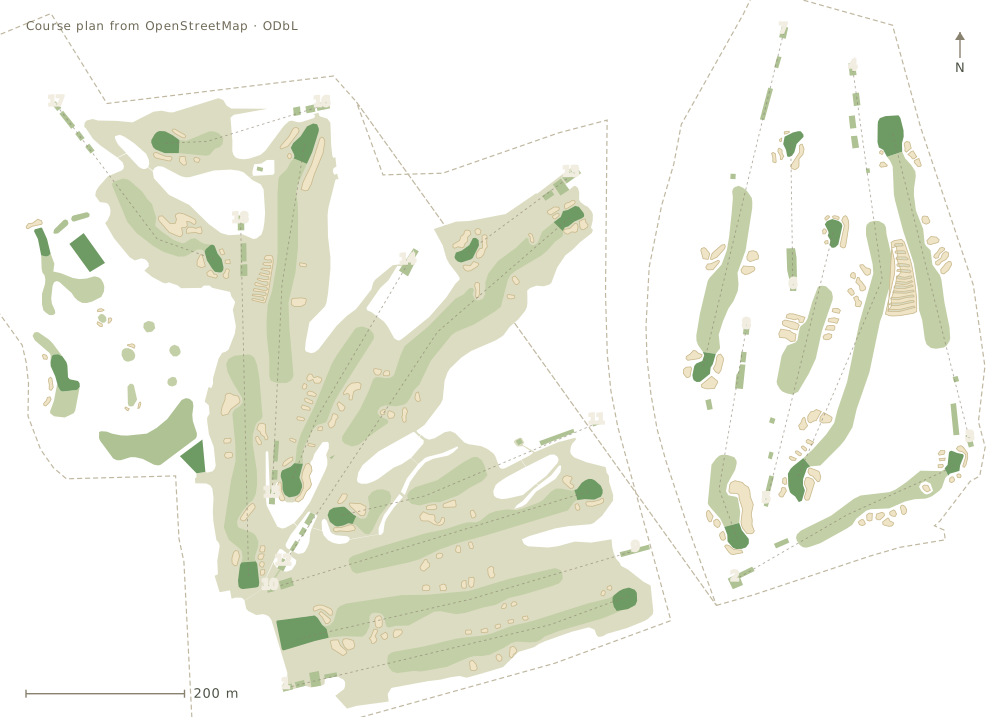
Oakmont Country Club, built by industrialist Henry Fownes in 1903 northeast of Pittsburgh, is the most U.S. Open-tested course in history. Fownes designed Oakmont to be intentionally severe — its lightning-fast greens, deep church-pew bunkers, and relentless rough regularly produce the highest scoring averages of any major venue. The course has hosted a record nine U.S. Opens, four PGA Championships, and three U.S. Amateurs. Johnny Miller's final-round 63 in the 1973 U.S. Open and Tiger Woods' 2000 record remain among the most astonishing performances in major championship history.
Signature Hole
3rd hole, par 4, 428 yards — flanked by the famous church-pew bunkers dividing the 3rd and 4th fairways
Notable Tournaments
- 1919 U.S. Open
- 1927 U.S. Open
- 1935 U.S. Open
- 1953 U.S. Open
- 1962 U.S. Open
- 1973 U.S. Open
- 1983 U.S. Open
- 1994 U.S. Open
- 2007 U.S. Open
- 2016 U.S. Open
- 2025 U.S. Open
- 1978 PGA Championship
- 2022 PGA Championship
In the context of the top 100
Where this course sits against every ranked course on the list.
Frequently asked questions
Is Oakmont Country Club public or private?
Oakmont Country Club is a private club. Play is generally limited to members and their accompanied guests.
Who designed Oakmont Country Club?
Oakmont Country Club was designed by Henry Fownes and opened in 1903.
Where does Oakmont Country Club rank among the top golf courses in America?
Oakmont Country Club ranks #5 on our consensus ranking of America's 100 greatest golf courses, synthesized from Golf Digest, Golfweek, and GOLF Magazine.
What is the signature hole at Oakmont Country Club?
The signature hole at Oakmont Country Club is the 3rd hole, par 4, 428 yards — flanked by the famous church-pew bunkers dividing the 3rd and 4th fairways.